


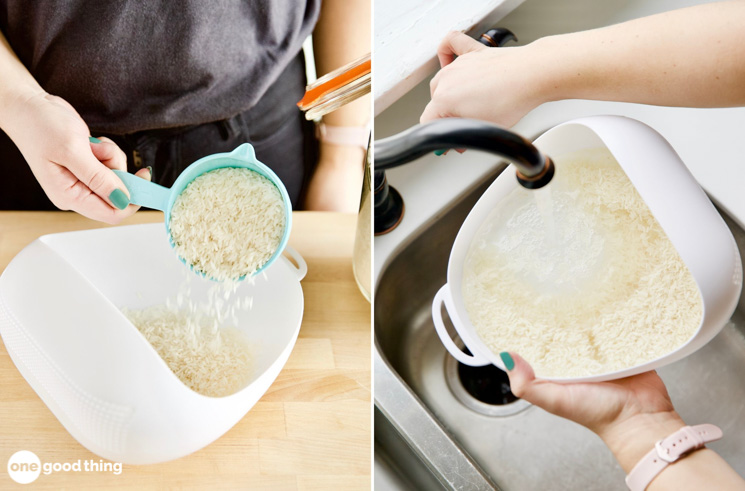
Do You Really Need to Rinse Rice?
If you cook as much rice as I do, you’ve probably also asked yourself: “Do I need to rinse rice? And if so, how do I rinse rice?” In this post, I hope to provide a definitive answer to both those questions.
By the time you’re finished reading, you’ll not only know whether you should rinse your rice before cooking it, but why it makes a difference. And once you’re armed with this important information, you’ll be ready to learn how to make the best rice ever!
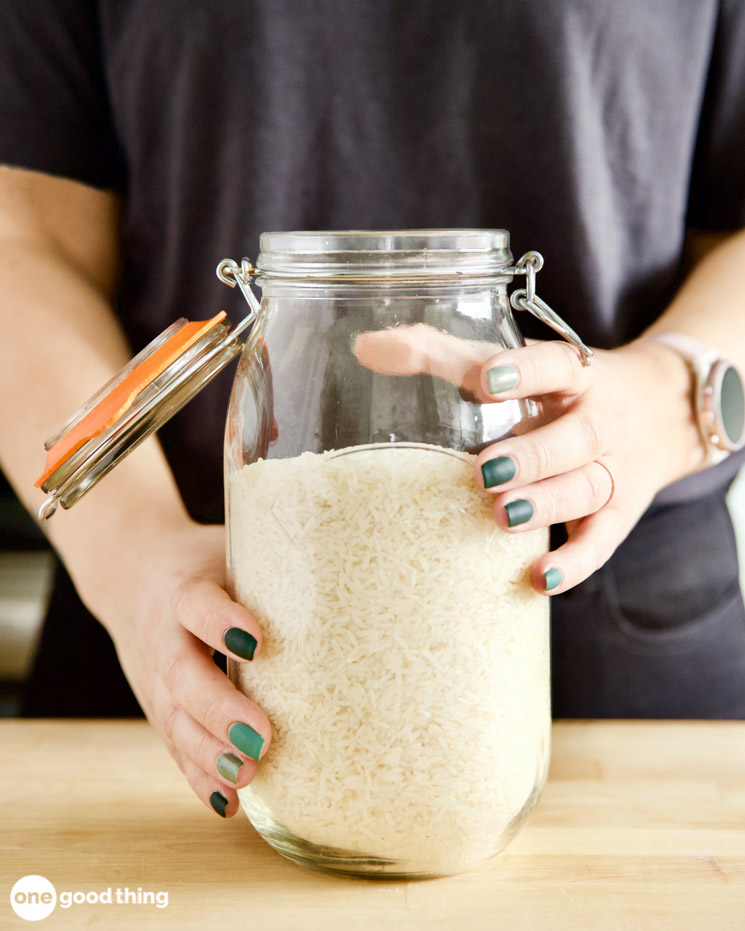
Why Wash Rice Before Cooking It?
Yes, you should rinse rice before cooking it, and there are a couple of reasons why.
First, washing rice removes impurities. A couple of quick rinses helps to eliminate dirt, dust, debris, chemicals, and even bugs that might be present alongside dry rice.
Second, rinsing rice improves its texture. While the rice moves around during processing and shipping, the friction generates a starchy powder that can give your cooked rice a sticky or gummy texture. Rinsing rise removes the excess starch, helping to ensure your cooked rice turns out fluffy and delicious.
As you can see, taking an extra minute to rinse rice before cooking it can make a big difference! (It’s also a great way to get rice water, which can benefit your skin and your hair too!)
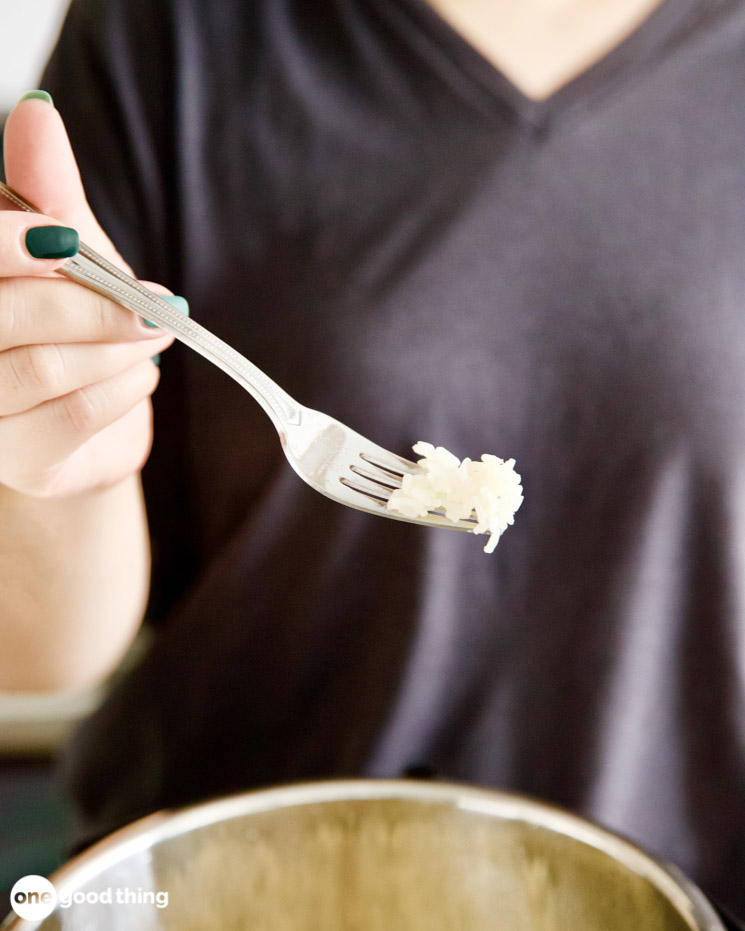
What Types of Rice and Grains Should You Wash?
Rinse these rices and grains:
- White rice, including basmati, jasmine, long grain, short grain, sushi rice, etc.
- Brown rice of all kinds
- Rice for rice pudding
- Grains like farro, barley, and quinoa
Don’t rinse these rices:
- Arborio rice for risotto — The extra starch is an important part of risotto’s texture!
- Minute rice — Rinsing par-cooked rice will make it unpleasantly gummy.
Related: Foolproof Oven-Baked Brown Rice
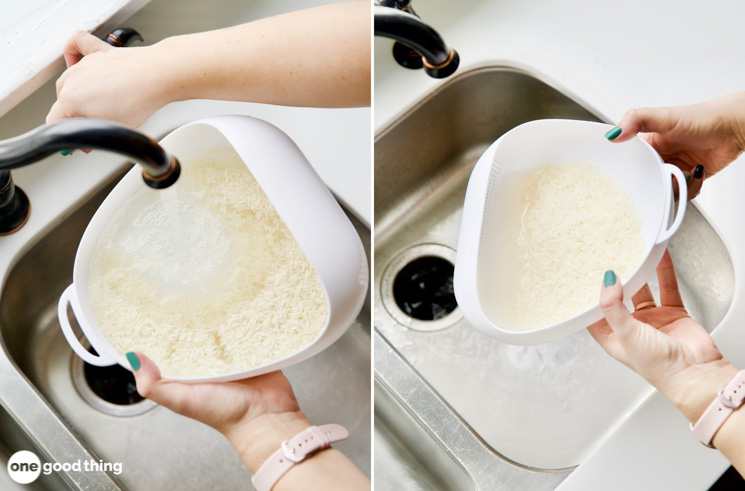
How to Wash Rice in 4 Easy Steps (Strainer Method)
- Pour rice into a bowl, cover it with a few inches of cold water, then use your hand to agitate the rice and loosen the excess starches.
- Use a fine mesh strainer or sieve to strain the cloudy water away from the rice, then return the rice to the bowl.
- Cover the rice with clean water, then stir and strain again.
- If the water is relatively clear after the second rinse, you can drain it and begin cooking. If it’s still cloudy, rinse the rice once more before cooking.
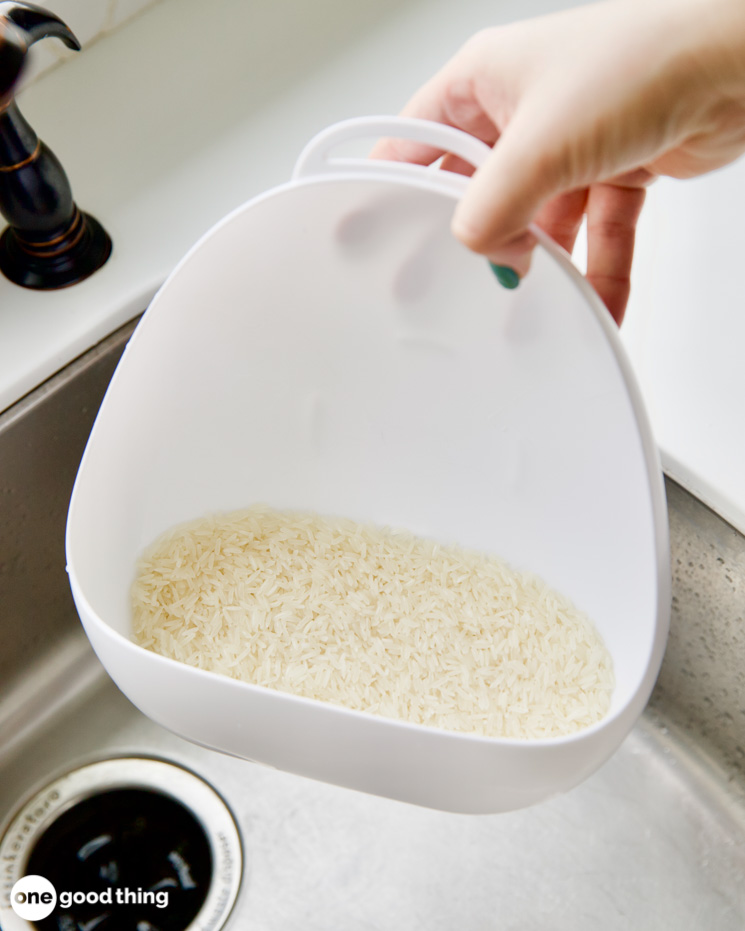
You can save yourself a step in this method by using a bowl with a built-in strainer. These rice and grain washer bowls are perfect for washing rice, but they’re also handy for soaking and rinsing other foods too, thanks to the strainer on the side.

How to Wash Rice Without a Strainer (Bowl Method)
Although using a strainer or colander is the best way to rinse rice, you don’t necessarily need one! You can use cheesecloth, a coffee filter, or even a clean dish towel to strain it.
You can also rinse rice using a regular bowl. Follow the same process described above, but instead of pouring it into a strainer, pour the water out slowly into your hand over your kitchen sink. (The trick is to do it slowly enough to keep most of the rice in the bowl, while your hand plays backup to catch any rice that tries to go astray.)
Related: Add This One Ingredient to Make the Best Rice Ever
A Note About Arsenic in White Rice
Inorganic arsenic, a well-known carcinogen, can be found in small amounts in many of our favorite foods, including white rice. In a 2012 article from Consumer Reports, an analysis of arsenic research data showed that people who reported eating rice had 44% greater arsenic levels in their urine than those who hadn’t.
More Ideas You'll Love

According to the Arsenic in Rice and Rice Products Risk Assessment Report published by the FDA in 2016, rinsing rice thoroughly (with 4-6 changes of water) may reduce overall arsenic levels by 28-60%. However, the report also states that aggressive rinsing under running water can wash away some of rice’s nutrients, so that’s worth taking into consideration!
What’s your favorite rice recipe?
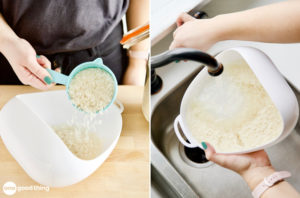
How to Wash Rice
Equipment
- Strainer/colander or bowl
Ingredients
- Rice
- Cold water
Instructions
- Pour your rice into a bowl and cover it with a few inches of cool water, then use your hand to move the rice around to remove the excess starch.
- Use a fine mesh strainer or sieve to strain the cloudy water away from the rice, then return the rice to the bowl.
- Cover the rice with clean water, then wash and strain it again.
- If the water runs clear after the second rinse, you can drain it and begin cooking. If it’s still quite cloudy, rinse the rice again before cooking.







If the rinse water contains arsenic and other stuff we’re trying to avoid, why would anyone use it on their face?
Please log in or create a free account to comment.I eat Brown Rice. White rice raises your blood sugar in your body But brown rice does not.
Please log in or create a free account to comment.And If you want it to be soft just cook the brown rice 1 minute longer. That’s what I do. and That’s what it says on the box.
I’m fascinated by this. Before reading it, I’d have been in the “no” brigade, now I’m torn! Does it matter what type of rice it is? Because I normally use easy cook, I washed it once and it came out sticky and not separate and fluffy.
Please log in or create a free account to comment.It’s like the toilet paper roll – over or under controversy, Jenni! :-) There is no need to rinse instant/easy rice. This is only for regular rice.
Please log in or create a free account to comment.I have never in my life, rinsed my rice. I usually use the white parboiled rice, which means the starchy surface has already been removed.
Please log in or create a free account to comment.If the rinse water contains arsenic and other stuff we’re trying to avoid, why would anyone use it on their face?
Please log in or create a free account to comment.When I rinsed my long grain white rice, my rice pudding didn’t thicken. I guess that extra starch is needed for the recipe to succeed.
Please log in or create a free account to comment.If you want to eat the rice with your hands, it helps if it is sticky, so perhaps, in that case, just a quick rinse?
Please log in or create a free account to comment.I soak the rice in boiling water. Later, I rinse it under cold water several times. Long-grained rice cooks more quickly I find, and the grains are separate and fluffy. At the end of cooking I add some butter.
Please log in or create a free account to comment.Rather than spend $12 on yet another kitchen gadget, why not simply use a wire (or plastic) strainer set in a mixing bowl. A colander works well too.
Please log in or create a free account to comment.Tried right after I read this, however.. my rice was incredibly sticky! Perhaps the details s/b expanded upon? How quickly after you rinse should rice go into boiling water? Ours set about 30 mins.
Please log in or create a free account to comment.Use the rice rinse water to splash on face. Makes skin smooth and soft. Old Japan custom
Please log in or create a free account to comment.I love rice and can make a meal out of it. I prefer white rice with butter (added after it’s cooked) and salt. I also like fried rice.
I didn’t know about rinsing rice. Can you rinse, let dry, then store it so you don’t have to rinse before cooking?
Please log in or create a free account to comment.No, you don’t want to introduce moisture until you’re ready to cook or your rice might spoil.
Please log in or create a free account to comment.We don’t eat rice often and try to buy organic. When we do, I save the starch water into a jar and add it to my fabric softener. That’s right it’s useful! I got tip from Australia’s queen of clean Shannon Lush
Please log in or create a free account to comment.The rinsing bowl you are using is not currently available on Amazon. There is a very similar one, however that is available. I’m getting that one! Excited!
Please log in or create a free account to comment.Do you know if that one can be used for Quinoa as well or perhaps there’s one specifically for Quinoa?
Please log in or create a free account to comment.I make a chicken or pork, rice casserole. I use a can of cream of chicken soup, and two cans of water. Mix in a casserole dish. Add a soup can of rice, and stir. Place chicken or pork on top. Bake at 350 degrees fo about 45 minutes or until rice is done. You can add chopped onions or any seasonings you like. It’s easy and simple and really delicious.
Please log in or create a free account to comment.I love the rinse bowls and just ordered them. I freeze 60 pints of blueberries every year and these washer/strainers will come in handy for that also. Good price. Oh, btw, I always rinse my rice. If I don’t, I tend to get a white frothy foam while cooking that looks awful.
Please log in or create a free account to comment.Is rinsing also advised for instant rice, i.e. Minute Rice?
Please log in or create a free account to comment.Nope, no need to rinse Minute Rice! :-)
Please log in or create a free account to comment.Yes! Jillee, you are correct! Rinsing rice is very necessary be it white, brown, Asian or from the USA. This comes out of a field and it will not harm it one bit. Koreans I know rinse, rinse, rinse and their rice is amazing! In Arab foods, same thing! They rinse the same, over and over till the rinse water is clear! It makes a huge difference! :) Yum! Clean, warm rice! :)
Please log in or create a free account to comment.Do you need to “soak & rinse” or can you just rinse under running water?
Please log in or create a free account to comment.Look at the pictures above and you will see! Rice in bowl. Pour water over it so the rice is covered more than an inch. Run your fingers through it. Tip and pour off water and repeat! Soaking is a different process and I have never seen rice soaked. :)
Please log in or create a free account to comment.Milli, I think Joanne meant putting the rice in water to rinse or can you do it under running water instead using a seive or something.
(This is how I do it, but it might be better to do it in a bowl of water and repeat until the water is clear, I’ll have to try it and see if it’s better).
A quick rinse will definitely improve your rice, but a “soak & rinse” is even better :-)
Please log in or create a free account to comment.A quick rinse is better than no rinsing~! However doing it in a bowl lets you see when your rice is clean, and doesnt waste as much water during the process. :)
Please log in or create a free account to comment.I’ve never even heard of doing this, much less debated the pros and cons. Polenta yes, but rice? It does make sense given what I’ve read here, but I also came across a blurb in Cooking Light years ago that recommended cooking the rice in much more water than what is needed for absorption (like pasta), then draining it afterward. This keeps the individual rice grains from rubbing against each other during cooking, and it seems this would also serve to rinse away any excess starch. One question: Is rinsing also necessary for whole-grain (i.e, brown) rice, as the hull is still intact and would presumably shield the grains from rubbing together – ?
I’ve also read about the toxins in conventionally-grown rice and have switched to organic when I can find it.
Please log in or create a free account to comment.I usually fry my rice in a little oil before I cook it, just until it gets an opaque white color . It would be hard to do if it were wet. Interesting!
Please log in or create a free account to comment.Most risotto recipes call for sauteeing the rice in butter before adding the liquid, but what does pre-frying the rice for other dishes do? This might be something worth trying the next time I cook rice…
Please log in or create a free account to comment.By sautéing rice before adding liquid helps to reduce starch; it toasts the grains of rice which gives it a nice, ‘nutty’ aroma; you can also add other flavours at this point i.e. stock instead of water, herbs, spices, lemon/lime rind and or juice; tomato paste; onion; garlic; anchovy essence; the list is only restricted by imagination.
I used to do that all the time too, and noticed that many rice bags ask us to refrain from rinsing, but then a Dominican friend said that she always rinses hers because “If people working with the rice between the field and your home know you won’t be rinsing it, they could cause mischief with it and I wouldn’t serve it to my family without rinsing well first”. That threw me, and I started rinsing all the time. I used to make rice your way and miss doing that, as I loved the way it came out, separate and fluffy.
Please log in or create a free account to comment.Wendy, you can still sauté (sweat off) your rice after rinsing, it works just the same.
You can still rinse the rice before crying until translucent, many chefs, including myself (retired lecturer, Hospitality Management and Catering) do this for braised rice.
Please log in or create a free account to comment.Hope this helps.
I have been rinsing my rice forever. Not only to remove the starch, but to make it
Please log in or create a free account to comment.Extremely fluffy. The one thing I do is rinse so well the water rinses completely clear.
I agree generally but risotto rice shouldn’t be rinsed as it’s the starch that makes it creamy.
Please log in or create a free account to comment.My family came from Sri Lanka over 60 years ago. We ate a lot of curry and rice there, and continued to do so once we moved to the States. I eat curry infrequently now, but rice fairly often. I always buy a nice imported aged basmati. I not only never rinse my rice, I also cook it for less than half the time of any “American” recipe I’ve seen (simmered about 7 minutes after it comes to a boil using 1 part rice to 2 parts water, and I add salt (of course) and a pat of butter). The rice comes out perfectly every single time and is never ever sticky.
Please log in or create a free account to comment.I eat only sprouted brown rice. Does that also need rinsing since it was already soaked in water?
Please log in or create a free account to comment.It is so wonderful how many different ways we all prepare rice, an education in culture. Thanks Jillee for bringing us all together in different ways – how does one obtain sprouted brown rice? We’re trying to eat a plant-based diet – sprouted brown rice sounds like the ticket!
Please log in or create a free account to comment.I buy my sprouted brown rice from Fred Meyer (aka Krogers). I believe they are found all over the US.